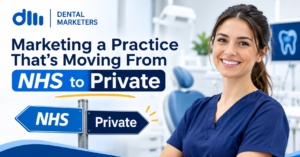
Marketing a practice that’s moving from NHS to private works best in three stages. First, keep your current patients with clear and honest messages. Next, update your website and Google profile. Then, attract new private patients with local SEO, reviews and careful paid ads.
Moving from NHS to private is a big step for any dental practice. However, good care alone will not fill your diary. You need a clear marketing plan. This guide explains what to do, when to do it and which UK rules to follow. As a result, you can keep your patients and grow with confidence.
What Is NHS to Private Practice Marketing?
NHS to private practice marketing is the plan a dental practice uses for this change. It tells patients what is happening and helps you win new private patients. It covers patient letters, your website, your Google profile, reviews and adverts. In short, it helps you keep trust while you change how you charge for care.
Why Marketing Matters When You Leave the NHS
Under the NHS, patients often came to you because demand was high. In private care, however, patients choose you. So marketing becomes a core part of how your practice runs.
Why it matters
- Some patients may leave. A few will look for a new NHS dentist. Clear messages help more of them stay.
- Patients compare practices. Most read reviews and check prices online before they book.
- The rules still apply. The General Dental Council (GDC) and the Advertising Standards Authority (ASA) set clear standards for dental adverts.
- Trust is fragile. A rushed or unclear message can lead to complaints and poor reviews.
How it works
Marketing a move to private usually runs in three stages:
- Retain: Tell your current patients first and offer them a private plan.
- Update: Change your website, Google Business Profile and printed materials.
- Attract: Bring in new private patients through local SEO, reviews, content and ads.
The order matters. For example, if you run adverts before your website shows private fees, you waste money. You also confuse the people who click.
Key timing facts
In England, Integrated Care Boards (ICBs) buy NHS dental services from practices. NHS dental contracts normally need three months’ notice to end. Also, the NHS dental contract in England changed in April 2026. So check your own terms with your ICB and your adviser. Ideally, start your marketing plan before you give notice.
What to say to worried patients
Many patients feel upset when they hear the news. So prepare calm, simple answers in advance. For example, your team can say:
- “We are making this change so we can give you more time at each visit.”
- “Here are our plan prices. You can pay monthly to spread the cost.”
- “If you want to stay with the NHS, we can tell you how to find a local NHS dentist.”
- “Your current treatment will still finish as planned.”
Above all, listen first and never pressure anyone. Some patients may need extra time, such as older people or families with children. In those cases, offer a short call or a face-to-face chat.
UK rules to follow
Every message you send must stay within the rules. Keep these points in mind:
- Only use the word “specialist” if the dentist is on the GDC Specialist List.
- Never claim you are “the best” or better than other practices.
- Back up every claim with evidence, as the CAP Code requires.
- Get written consent before you share before-and-after photos.
- Do not advertise prescription-only medicines, such as anti-wrinkle injections, to the public.
- If you offer patient finance, use the wording your FCA-authorised provider approves.
Step-by-Step Guide to Marketing Your Move to Private
Follow these nine steps in order. Each one builds on the step before it.
- Make four decisions first. Decide if you will go fully private or mixed. Next, choose between a membership plan and pay-as-you-go. After that, set your prices. Finally, set a target for how many patients you want to keep.
- Brief your whole team. Your reception team will hear the first questions. So give them a short script and an FAQ sheet. As a result, every patient hears the same answer.
- Write one clear patient letter. Say what is changing and when. Explain why you are making the change. List your prices and plan options. Then tell patients how to find an NHS dentist if they want one. Lastly, add a named contact.
- Send messages in a sensible order. Start with a letter or email. Then add a page on your website. Next, talk to patients in the chair. After that, follow up with anyone who has not replied.
- Check data protection rules. A message about the change counts as a service message. However, a sales offer for a plan may count as direct marketing under UK GDPR and PECR. If in doubt, read the ICO guidance before you email or text.
- Update your website. Remove old NHS wording. Add a clear fees page. Show your GDC numbers and practice details. Also, write a page for each main treatment, such as implants, Invisalign and hygiene.
- Update your Google Business Profile. Change your description and your list of services. Make sure your name, address and phone number match everywhere. Reply to every review calmly, even the angry ones.
- Start attracting new patients. Build your local SEO first. Then add Google Ads for high-value treatments. Ask happy patients for reviews. Meanwhile, share helpful posts on Facebook and Instagram.
- Track your results every week. Count plan sign-ups against your target. Record where each enquiry came from. Work out your cost per new patient. Then spend more on what works.
A simple timeline
- Six months before: Make your four decisions, set a budget and brief your team.
- Three months before: Give NHS notice, send patient letters and update your website.
- Launch week: Switch your Google profile, go live with your fees page and start ads.
- First six months: Track sign-ups, gather reviews and add new treatment content.
Key Benefits of a Planned Marketing Approach
A clear plan protects your income and your reputation. Here is what it gives you:
- More patients stay. Early, honest messages reduce confusion and fear.
- Fewer complaints. Clear answers about prices prevent nasty surprises.
- Steady income. Membership plans bring in predictable monthly revenue.
- Better reviews. A calm team and a clear process lead to happier patients.
- Lower ad costs. A ready website turns more clicks into bookings.
- Stronger AI visibility. Clear pages and FAQs help Google AI Overviews and ChatGPT find you.
- Less risk. Following GDC, ASA and ICO rules protects your registration and your name.
Common mistakes to avoid
- Running adverts before your website is ready.
- Showing different prices in different places.
- Leaving old NHS wording on your website or Google profile.
- Using risky words such as “specialist” or “best”.
- Expecting SEO to replace lost patients in a few weeks. It usually takes months, not weeks.
Frequently Asked Questions
How much notice should I give patients before going private?
Most practices tell patients as soon as they give NHS notice. This is usually three months. Earlier notice gives patients more time to decide and reduces complaints.
Will I lose patients when I go private?
Some patients will leave. However, clear letters, fair plan prices and a well-briefed team help more patients stay.
Should I offer a membership plan or pay-as-you-go?
Many practices offer both. A plan gives you steady monthly income. Pay-as-you-go suits patients who visit less often.
Can I email my NHS patients about private plans?
You can send service messages about the change. For sales offers, check the UK GDPR and PECR consent rules and the ICO guidance first.
What should my patient letter include?
Include the date of the change, the reason and your new prices. Also, explain your plan options, how to find NHS care and who patients can contact with questions.
Do I need to change my Google Business Profile?
Yes. Update your description, services and photos. Also, remove any NHS wording that no longer applies.
Can I still offer some NHS care?
Yes. Many practices become mixed practices. In that case, explain clearly which treatments are NHS and which are private.
How long does dental SEO take to work?
Local SEO usually takes several months to show clear results. That is why you should start before your private launch.
Do I need a dental marketing agency?
Not always. However, an agency that knows GDC and ASA rules can save you time and reduce your risk.
Get Expert Help With Your Move to Private
Moving from NHS to private does not have to feel risky. At Dental Marketers, we work only with UK dental practices. We help with websites, local SEO, Google Ads, social media and review management. Moreover, we build every campaign with GDC and ASA rules in mind. If you are planning a change, book a free website audit. We will show you what to fix first. You can explore our dental marketing services for UK practices or contact our team today.