Unlocking the Power of SEO for Your Dental Practice
Search engine optimisation for dentists has emerged as one of the most powerful tools for dental practices aiming to attract more patients, boost digital visibility, and sustain long-term growth. In 2025, the ability to stand out in local search results is no longer optional—it’s essential for survival in a competitive market.
Grasping the Concept of Dental SEO
Dental SEO focuses on optimising a dental website so that it appears prominently when potential patients search for treatments or services online. This involves a mix of on-site optimisation, local search strategies, technical improvements, and content marketing—all designed specifically for dental professionals.
Why SEO Is Important to Dental Practices
Modern patients increasingly turn to Google to find their next dentist. A clinic that appears prominently in search results instantly gains a credibility boost. SEO helps build this visibility while strengthening the trust prospective patients feel towards your brand.
The Role of SEO in Dental Practice Growth
Effective SEO drives new patients through consistent online exposure. By ranking higher for high-intent search terms such as ‘dentist near me’ or ‘family dental care’—your clinic can generate qualified leads continuously. Strong SEO also supports other marketing efforts by improving conversion rates and boosting your ROI across digital channels.
SEO Strengthens Patient Trust and Brand Credibility
Patients often associate top search rankings with authority and reliability. A well-optimised site with educational, clear, and easy-to-navigate content assures potential patients of your professionalism. Regularly updated blogs, authentic reviews, and accurate business listings reinforce patient trust.
How Search Engines Rank Dental Websites
3 Ways SEO Drives Patient Traffic to Your Dental Website
1. Local Search Optimisation
Optimising for local search ensures your practice appears in maps, directories, and ‘near me’ results, connecting you with patients in your immediate vicinity.
2. Focused Content Marketing
Informative and keyword-rich content addressing questions like ‘what to expect at your first dental visit’ or ‘how to maintain oral hygiene’ attracts and engages searchers seeking guidance.
3. Technical and Mobile Optimisation
Fast loading times, mobile-friendly design, and secure websites are critical for ranking well and improving user satisfaction, which in turn increases conversions.
What Is Dental SEO and How Does It Work?
The Mechanics Behind Search Engines
Search engines use algorithms to evaluate a website’s relevance and quality. Factors like site speed, link quality, structured data, and user engagement determine where your pages appear in search results. Understanding these mechanics allows you to optimise strategically rather than relying on guesswork.
Factors Affecting On-Site Scoring for Dental Websites
On-site elements such as title tags, header structure, image alt text, and internal linking directly influence SEO results. Useful, patient-centred content that naturally integrates target keywords and maintains a clean design ensures better scoring and longer visitor retention.
Local SEO Strategies for Dental Practices
Local SEO is the backbone of dental marketing. Ensure your practice’s name, address, and phone number are consistent across all online platforms. Register and optimise your Google Business Profile, encourage patient reviews, and include local keywords within your website content to dominate local search results.
5 Steps to Improve Your Dental Clinic’s Local SEO
- Audit and optimise your website—Ensure correct meta descriptions, clean architecture, and optimised keywords.
- Claim and optimise your business listing—Provide accurate service information, add professional images, and encourage reviews.
- Create localised content—Discuss community events, dental health days, or local partnerships.
- Earn local backlinks—Collaborate with local organisations or publications for features and mentions.
- Measure results regularly—Monitor keyword performance, traffic, and calls generated through local search.
The Long-Term Investment Benefits of Dental SEO
Unlike paid advertising, which stops generating results once spending ends, SEO builds sustained visibility. When maintained properly, it continues to attract organic traffic for years, growing your patient base while improving cost efficiency.
Dental SEO Trends: Staying Ahead of the Competition
As search algorithms evolve, dental practices must adapt. Voice search optimisation, AI-driven personalisation, and user intent analysis are increasingly shaping how patients find and engage with dental brands. Staying informed about trends ensures your marketing remains effective and competitive.
The Increasing Importance of Mobile-Optimised Dental Websites
With most dental searches now conducted on mobile devices, a responsive, fast, and intuitive website is crucial. Mobile optimisation not only pleases patients but also signals to Google that your site deserves higher rankings.
How to Effectively Use Dental SEO to Expand Your Practice
Start by defining your target audience and identifying their search behaviour. Develop content tailored to their concerns—such as anxiety about dental visits or understanding treatment options. Pair this with strong local SEO and analytics-driven improvements to achieve consistent growth.
Specialised Industry Knowledge in Dental SEO
Working within the dental sector requires understanding of patient intent, regulatory considerations, and treatment-specific terminology. Customising SEO strategies around these nuances ensures authenticity, accuracy, and relevance—all key factors Google prioritises in search rankings.
Improved Online Visibility and Competitive Advantage
When effectively executed, dental SEO elevates a practice above its competitors by positioning its services directly in front of patients ready to book appointments. The stronger your visibility, the less you need to rely on costly advertising to fill your patient schedule.
Enhanced User Experience and Higher Conversion Rates
An intuitive, well-designed dental website translates to better patient experience. Visitors are more likely to call, book, or fill out an enquiry form when navigation, speed, and accessibility are prioritised. These factors not only enhance conversion rates but also contribute positively to your SEO performance.
Measurable Results Through Data Insights
Analytics tools reveal exactly how SEO impacts your dental practice—from increased bookings to call volume and engagement patterns. Tracking metrics like click-through rate, average session duration, and keyword rankings enables smarter decisions and continuous improvement.
How Search Engines Rank Dental Websites
Key Takeaways
- SEO builds long-term growth and online trust.
- Local SEO is critical for geographic targeting.
- Content quality and mobile optimisation are ranking priorities.
- Measurable data guides sustainable improvements.
Conclusion
SEO for dental practices is more than digital visibility—it’s about building credibility, nurturing patient relationships, and future-proofing your clinic against competition. Investing in SEO today ensures your practice remains discoverable, trustworthy, and positioned for growth in a rapidly changing digital landscape.
Call to Action: Ready to attract more patients through smarter SEO strategies? Speak to our digital marketing team today.
FAQs
1. How long does it take to see results from dental SEO?
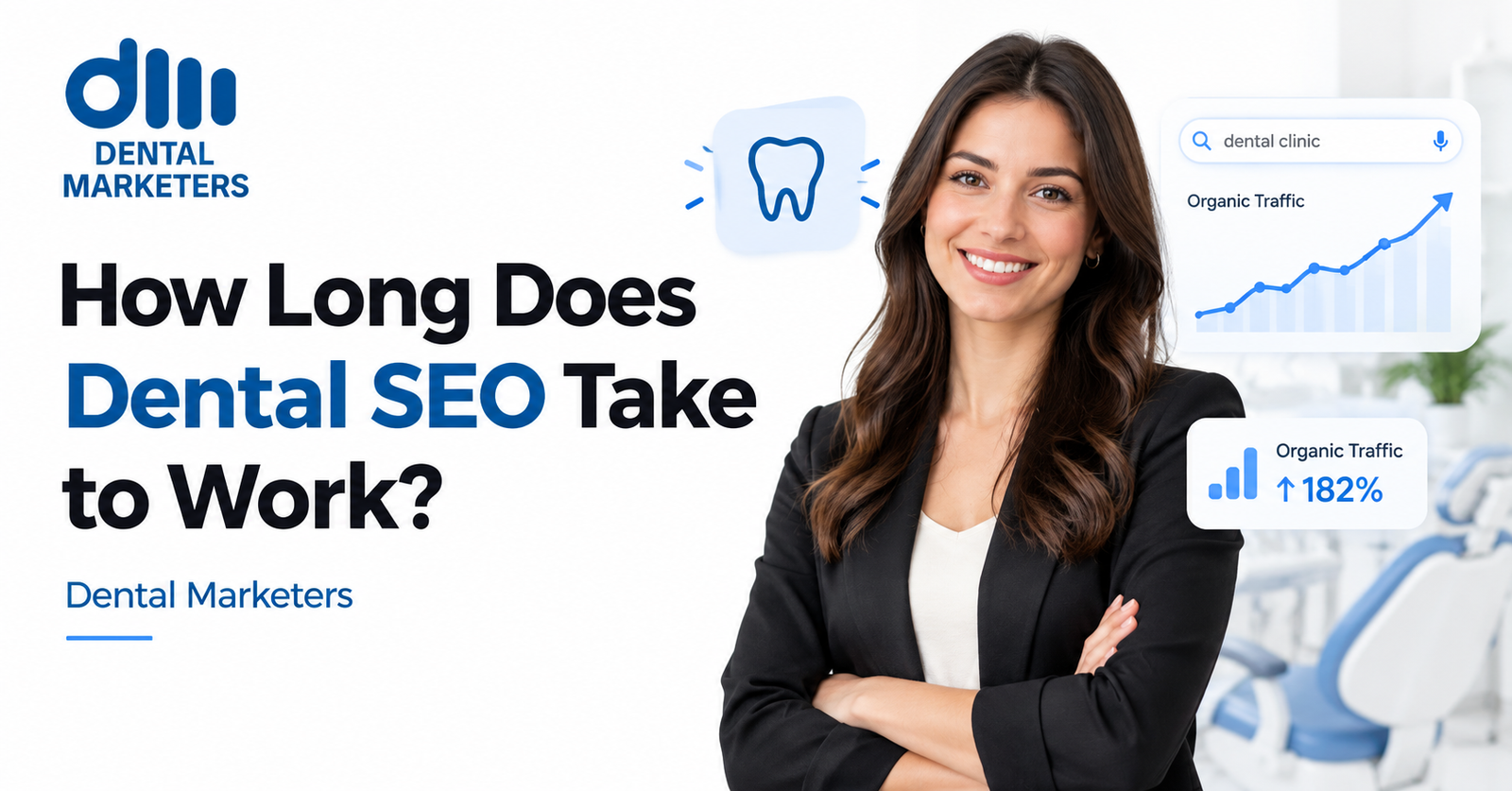
Most dental practices start seeing measurable improvements within three to six months, though long-term consistency delivers the best results.
2. Is local SEO more important than general SEO for dentists?
Yes, as most patients search for dental services within their immediate area, local SEO plays a significant role in driving relevant traffic and appointments.
3. What are the most effective dental keywords to target?
Focus on treatments and location-based keywords such as “cosmetic dentist [city]” or “emergency dental care near me.”
4. Can social media help with dental SEO?
While social signals aren’t a direct ranking factor, social engagement increases brand awareness, which can lead to more backlinks and higher search credibility.
5. How can I track whether my SEO strategy is working?
Use analytics to monitor keyword rankings, organic traffic, website conversions, and patient enquiries. Regular reporting helps refine your efforts for improved performance.