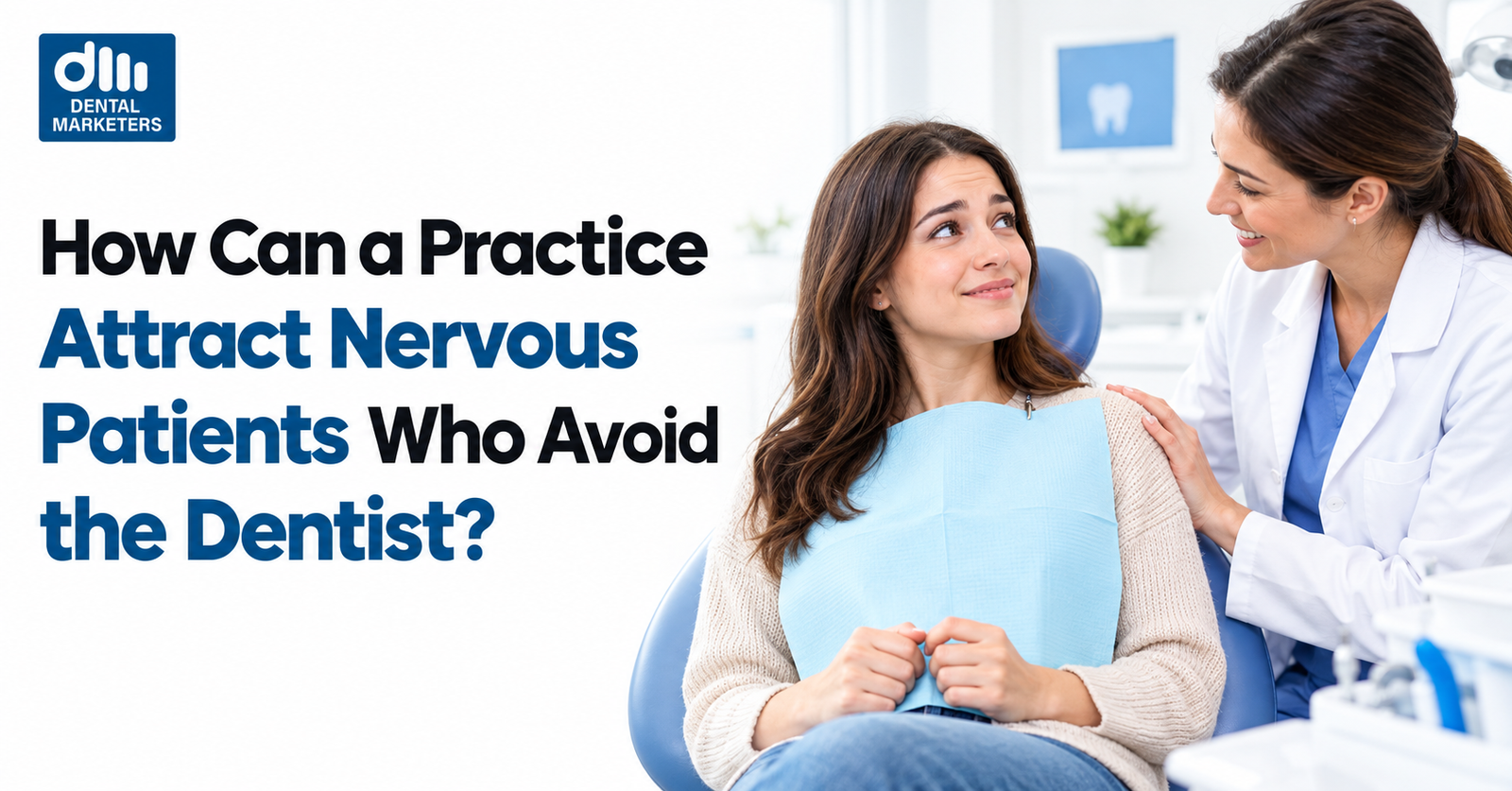
A dental practice can attract nervous patients by making them feel safe before they ever call. Use calm, honest language, a dedicated nervous-patient page, team videos, real reviews and clear sedation information. Then, offer low-pressure first steps, such as a chat-only visit, and prove that care at every appointment.
Many people in the UK feel nervous about the dentist. As a result, some stay away for years. These patients often need care the most. However, they will only book when they trust you. This guide shows your practice how to reach nervous patients and help them come back.
What Does Attracting Nervous Patients Mean?
Attracting nervous patients means using marketing and patient care to reach people who fear or avoid the dentist. It covers every step, from the first Google search to the follow-up after treatment. In short, it is about earning trust before you ask for a booking.
Why Do Nervous Patients Avoid the Dentist?
Dental fear is very common. In fact, a 2024 survey of 2,000 UK adults found that nearly half fear the dentist. Even more admitted that they put off visits. Common reasons include:
- A bad past experience: Many fears start in childhood.
- Fear of pain or needles: Some people worry about injections or discomfort.
- Loss of control: Lying back in the chair can feel helpless.
- Embarrassment: Some patients feel ashamed about the state of their teeth.
- Sounds and smells: The noise of the drill or a clinical smell can trigger fear.
- Fear of cost: Some people worry about surprise bills.
So, your marketing must answer these fears directly, in simple and kind words.
Why Should Your Practice Focus on Nervous Patients?
Nervous patients can become your most loyal patients. Once they trust you, they rarely want to move. They also tell friends and family who feel the same way. Therefore, a strong nervous-patient offer can grow your practice through reviews and referrals.
The Nervous Patient Journey
Nervous patients go through several stages before they book. The table below shows what they need at each stage:
| Stage | What the patient feels | What your practice should do |
| Searching online | Worried and unsure | Show calm, helpful content and real reviews |
| Visiting your website | Looking for signs of safety | Offer a clear nervous-patient page and team videos |
| Making contact | Scared to call | Offer online booking, email or text options |
| First visit | Very anxious | Offer a chat-only visit with no treatment |
| Treatment | Fear of pain and loss of control | Agree a stop signal and explain each step |
| After treatment | Relief, but still unsure | Follow up kindly and book the next visit |
Step-by-Step: How to Attract Nervous Dental Patients
Follow these steps in order. In our experience at Dental Marketers, practices that fix the patient experience first get far better results from their marketing.
Step 1: Build a Nervous-Patient Page
First, create a page on your website just for nervous patients. Explain what happens at a first visit, step by step. Also, show photos of your team and your calm waiting area. Then, list the ways you help, such as stop signals, headphones and sedation.
Step 2: Use Calm, Honest Language
Next, review the words on your website and adverts. Swap clinical words for gentle ones. For example, write “we will numb the area” instead of “injection”. However, never promise “pain-free” treatment, because you cannot guarantee it.
Step 3: Show Your Team on Video
Nervous patients want to know who they will meet. So, film short, friendly videos of your dentists, nurses and reception team. Also, add a video tour of your practice, from the front door to the treatment room.
Step 4: Explain Your Sedation Options
If you offer sedation, explain it clearly. Describe inhalation sedation, oral sedation and IV sedation in simple words. Then, say who it suits, how it feels and what it costs. If you do not offer it, explain how you can refer patients.
Step 5: Strengthen Your Local SEO
Many nervous patients search for terms such as “dentist for nervous patients near me”. Therefore, add these phrases naturally to your website and Google Business Profile. Also, post regular updates, photos and answers to common questions on your profile.
Step 6: Collect and Share Real Reviews
Reviews from other nervous patients build trust fast. So, ask happy patients for a review after a good visit. Next, reply to every review with warmth. With written consent, you can also share short patient stories on your website and social media.
Step 7: Make the First Contact Easy
Some nervous patients dread phone calls. Therefore, offer online booking, email, live chat or text messages. Also, train your reception team to spot nervous callers, slow down and offer a chat-only first visit.
Step 8: Deliver on Your Promise
Finally, your care must match your marketing. Flag nervous patients in your practice software. Then, offer longer appointments, quiet times of day and a stop signal. After the visit, follow up with a kind message.
How Can Social Media Help?
Social media lets nervous patients get to know you slowly, without any pressure. For example, you can share:
- Short “meet the team” clips.
- A walk-through of a first visit.
- Simple answers to common worries, such as “Will it hurt?”
- Patient stories, with written consent.
Keep the tone warm and calm. Also, avoid close-up clinical images that may scare nervous viewers.
How Should Your Practice Feel to Nervous Patients?
Your building also sends a message. In addition to good marketing, small changes inside the practice can make a big difference:
- Use soft lighting and calm colours in the waiting room.
- Keep the waiting room quiet, and play gentle background music.
- Reduce strong clinical smells where you can.
- Keep instruments out of sight until you need them.
- Let patients bring a friend or relative into the room.
- Offer headphones, blankets or a stress ball.
Which Marketing Rules Should You Follow?
UK dental adverts must stay honest. For example, the GDC expects dental professionals to advertise in a way that is accurate and not misleading. In addition, the ASA and the CAP Code apply to all UK adverts. So, avoid claims such as “100% pain-free” or “the best dentist for nervous patients” unless you can prove them.
How Can You Measure Your Results?
Track a few simple numbers each month. As a result, you can see what works:
- Nervous-patient enquiries: How many people ask about nervous care.
- First-visit bookings: How many enquiries turn into visits.
- Return rate: How many nervous patients come back.
- Reviews: How many reviews mention feeling calm or safe.
Key Benefits of Attracting Nervous Patients
- You help people who need dental care the most.
- You build loyal, long-term patients.
- You earn more reviews and word-of-mouth referrals.
- You can stand out from other practices in your area.
- You grow demand for treatments such as sedation and restorative care.
FAQs
What is the best way to market to nervous dental patients?
The best approach combines a clear nervous-patient page, calm language, team videos and real reviews. Also, offer an easy first contact and a chat-only first visit.
Should a practice offer sedation to attract nervous patients?
Sedation can help patients with severe fear. However, many nervous patients only need kind, patient care and clear explanations.
Can I advertise my practice as pain-free?
No. You cannot promise that treatment will never hurt. Instead, explain the steps you take to keep patients comfortable.
How do nervous patients search for a dentist?
Many search for phrases such as “dentist for nervous patients near me” or “sedation dentist”. So, use these phrases naturally on your website and Google Business Profile.
What should a nervous patient’s first visit include?
A first visit can be a simple chat with no treatment. Show the patient around, explain the next steps and agree a stop signal.
How can reception staff help nervous patients?
Reception staff can speak slowly, listen without judging and offer flexible options. Also, they can note the patient’s fears on their record.
How long does it take to attract nervous patients?
Some practices see new enquiries within a few weeks. However, trust, reviews and SEO usually take a few months to build.
Grow Your Nervous-Patient List With Dental Marketers
Nervous patients want to feel safe before they book. However, many practice websites and adverts never show that care. At Dental Marketers, we help UK practices build calm, compliant nervous-patient pages, local SEO, Google Business Profile content and review campaigns. As a result, you can reach the patients who need you most and keep them for years. So, if you want more nervous patients to choose your practice, contact Dental Marketers today for a free marketing review.
Also read : How to Get Recommended by ChatGPT | Dental Marketers