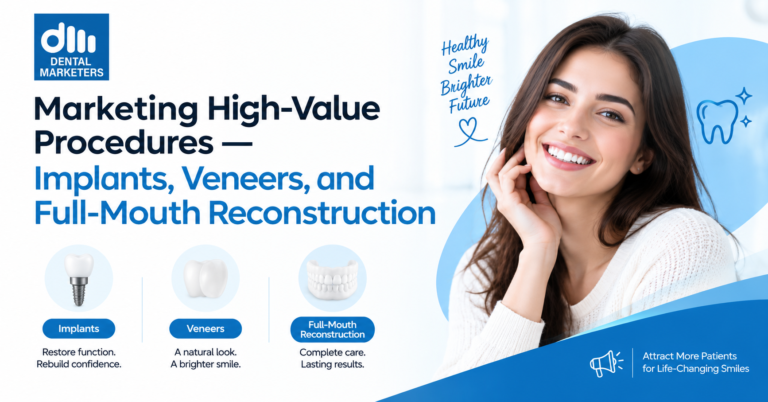
Marketing high-value dental procedures such as implants, veneers, and full-mouth reconstruction requires a different approach to routine dentistry, since patients research these significant decisions for months, comparing practices carefully before ever booking a consultation. Effective marketing matches content to each research stage, builds a genuine smile gallery, and identifies candidates already among existing patients.
Implants, veneers, and full-mouth reconstruction are not small decisions. Patients research them for months, not days. This guide explains why these high-value procedures need a different marketing approach. It also shows how to build one properly.
What Counts as a High-Value Procedure?
Marketing high-value dental procedures means promoting treatments like implants, veneers, and full-mouth reconstruction. Patients make a significant decision here, not a quick booking. It covers how you speak to patients. It covers how you show past results. It covers how you build trust over a longer decision. In short, it treats a large decision differently to a routine check-up.
High-value dental procedures include treatments like implants, veneers, and full-mouth reconstruction. The investment and the decision-making process are both significant here. These are not routine, low-consideration bookings.
Unlike a check-up, a patient rarely books these on the same day they first search. The decision involves real money. It involves real trust. It often involves real worry about getting it right.
Why This Matters So Much
Most dental marketing focuses on volume. Get more people through the door, fast. High-value procedures work differently. Fewer patients. Far higher value. A much longer road to booking.
Here is why this matters so much:
- Patients considering these treatments research carefully, often for months
- They compare practices, read reviews, and study results closely before ever calling
- Marketing built for routine check-ups rarely works for a decision this size
- A smile gallery buried on a website is a missed opportunity, not just an oversight
- Getting this right brings in fewer patients, but those patients are worth far more
As a result, high-value procedure marketing is not simply normal marketing done bigger. It needs its own approach entirely.
Picture a patient who has quietly wanted veneers for two years, but never felt ready to look into it properly. They finally search late one evening. What they find in that moment, whether it is a vague page or a clear, honest one, genuinely shapes which practice they end up choosing.
Why These Cases Need a Different Marketing Approach
Understanding how patients actually think helps you market to them properly.
Patients considering implants, veneers, or full-mouth work behave like buyers making a big purchase. They compare several practices carefully. They study before-and-after results closely. They take real time, often months, before booking a consultation at all.
Here is why this matters so much:
- These patients research far more thoroughly than routine dental patients
- A generic marketing message rarely earns trust for a decision this big
- Clear pricing and financing genuinely affect whether a patient goes ahead
- A poorly presented smile gallery wastes a real trust-building chance
- Existing patients are often a source of high-value cases nobody looks for
Picture two similar practices, both offering the same implant treatment. One markets it exactly like a routine check-up. It uses generic language and a buried gallery page. The other treats it as the big decision it really is. It gives real detail, honest costs, and a properly built gallery. Only one of these practices earns the patient’s trust before they ever pick up the phone.
How Patients Search for Implants, Veneers, and Full-Mouth Work
Patients search differently depending on where they are in their decision.
Early in their research, searches tend to be informational. Things like “dental implants versus bridge” or “how does full-mouth reconstruction work.” These patients are educating themselves. They are not ready to book yet. Real, helpful content here builds trust long before the first phone call.
Later, searches become far more specific and local. Things like “veneers cost [city]” or “best implant dentist near me.” These patients are actively comparing practices. Your website needs a clear, specific answer here, not vague reassurance.
Matching your content to each stage, rather than writing everything the same way, improves how well you reach both types of patient.
Turning Your Smile Gallery Into a Genuine Asset
Many practices treat their smile gallery as an afterthought. This wastes real potential.
Each transformation deserves its own page, not just a thumbnail in a flat gallery. Include a short case description, the procedure used, and a realistic sense of what was actually involved. This turns a simple photo into real content that search engines can find, not just something visitors admire once they already arrive.
A properly built gallery becomes a real source of new enquiries, not just decoration on an existing page.
Finding High-Value Cases Within Your Existing Patients
Many practices focus entirely on attracting brand new patients for high-value work. This overlooks a real source already sitting on your books.
Your existing patients, seen regularly for routine check-ups, often include real candidates for implants, veneers, or larger restorative work. Most practices have no real system for spotting these patients, or gently raising the option with them.
A few simple things help here. Genuine follow-up content after routine visits, mentioning options patients may not know exist. A simple smile assessment offered as part of a normal check-up. Honest, low-pressure information about options, rather than a hard sell.
Step-by-Step: Building a High-Value Procedure Marketing Strategy
Follow this general process to market these procedures properly.
Step one is to build genuinely helpful content for early-stage research questions, covering implants, veneers, and full-mouth reconstruction separately. Step two is to build clear, specific pages for patients actively comparing practices, with honest cost information. Step three is to rebuild your smile gallery into individual, properly described case pages. Step four is to introduce financing information early and clearly, rather than hiding it in a footnote. Step five is to build a simple system for identifying existing patients who may be candidates for further treatment. Step six is to review your consultation process itself, since marketing only gets a patient through the door.
Working through this properly builds a real pipeline of high-value cases over time, rather than relying on luck.
What Happens in the Consultation Matters Too
Marketing brings a patient to the door. What happens next decides whether they proceed.
A few things make a real difference. Explain scans and imaging clearly, in language the patient actually understands. Present the full range of realistic options, not simply the most expensive one. Cover costs and financing clearly, before the patient has to ask or leave to think it over. Even a modest improvement in how many consultations turn into bookings can transform your case volume. No extra enquiries needed at all.
Key Benefits of Getting This Right
Marketing built around real patient behaviour brings real, lasting rewards. For example:
- Higher-value patients. Fewer cases, but far more valuable ones, rather than volume alone.
- Stronger trust before the first call. Patients arrive already understanding what you offer.
- A real gallery asset. Past results actively bring in new enquiries, rather than sitting unused.
- Untapped existing patients. Real candidates already on your books get properly identified.
- Better consultation outcomes. A clear process turns more consultations into real bookings.
Altogether, these benefits make a dedicated approach to high-value procedures well worth the extra effort.
Frequently Asked Questions
Why do high-value dental procedures need different marketing?
Patients research these decisions far more thoroughly than routine treatment, so generic marketing rarely earns their trust.
How long do patients typically take to decide on treatments like veneers or implants?
Often several months, researching carefully and comparing practices before booking a consultation at all.
Should a smile gallery include more than just photos?
Yes. Each case genuinely benefits from its own description, procedure detail, and realistic context, not just an image.
Can existing patients be a source of high-value procedures?
Yes. Many practices have real candidates for implants or veneers already on their books, without a system to spot them.
Does discussing cost early put patients off?
Often the opposite. Honest, clear cost and financing information builds trust rather than losing patients.
Does the consultation itself affect how many patients proceed?
Yes, significantly. A clear, well-run consultation can noticeably improve how many patients go ahead with treatment.
Ready to Market Your High-Value Procedures Properly?
Implants, veneers, and full-mouth reconstruction deserve marketing built around how patients really make these decisions. Dental Marketers helps you build content, galleries, and a consultation process that actually turns careful researchers into booked patients. Left unaddressed, high-value cases quietly go to whichever practice earns trust first, not whichever one shouts loudest. Get in touch today, and let’s build a strategy that properly reflects the value of this work.
Also read:https://dentalmarketers.co.uk/sms-appointment-reminders-no-shows/