
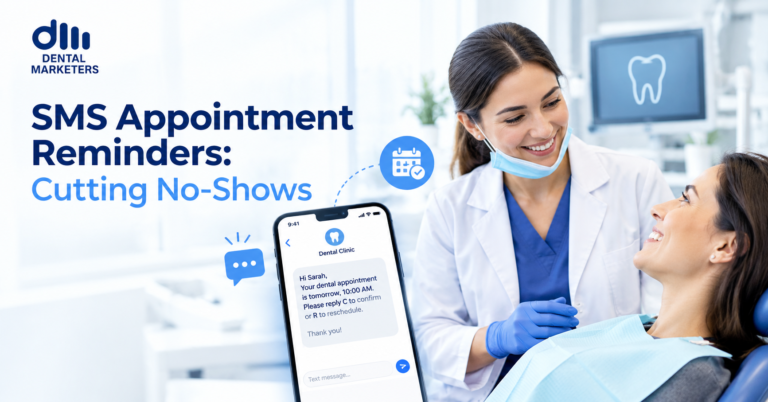
SMS appointment reminders reduce dental no-shows most effectively when patients can reply to confirm, cancel, or reschedule directly, rather than only receiving a one-way notification. A reminder that cannot take a reschedule does not reduce phone calls; it simply delays them, since patients who cannot attend still need to ring the practice.
Most dental practices already send SMS reminders. Many still have a busy phone line and a steady stream of no-shows. This guide explains why some reminder systems genuinely work, why others simply move the problem later, and how to reduce no-shows without patients finding it annoying.
What Are SMS Appointment Reminders?
SMS appointment reminders are text messages sent to patients ahead of a booking, prompting them to attend, confirm, or reschedule. In short, they aim to stop a patient forgetting, while giving them a simple way to act if they cannot come.
SMS appointment reminders are short text messages sent to patients before a booked appointment. They usually confirm the date, time, and location, and often ask the patient to confirm, cancel, or reschedule.
Simple reminders only notify. Better reminders let the patient act, right there in the message, without needing to call the practice at all.
Why This Matters So Much
Sending a reminder is easy. Building one that actually reduces phone calls and no-shows together is harder. Many practices send reminders that only state the time and date, with no way for the patient to reply.
Here is why this matters so much:
- A reminder only helps patients who genuinely forgot
- It does nothing for patients who remember but simply cannot attend
- If a patient cannot reply or reschedule easily, they usually just do not turn up
- Poorly timed or overly frequent reminders can feel intrusive, not helpful
- Getting this right reduces both no-shows and unnecessary phone calls at once
As a result, a good reminder system is not just about sending a message. It is about giving the patient a real way to act on it.
Picture two practices with identical no-show rates today. One sends a plain, one-way text with no reply option. The other sends a short message linked directly to the booking calendar, letting a patient rebook in seconds. Both practices reduce forgetting slightly. Only one of them also reduces phone calls, front desk stress, and empty slots at the same time.
Why Most Reminder Systems Don’t Actually Work
Understanding this difference changes how you should build your reminder system entirely.
A reminder that cannot take a reschedule does not reduce your call volume. It simply delays the call to later. Picture a patient who gets a text reading “your appointment is Tuesday at 3pm,” with no way to reply. If Tuesday does not work for them, their only option is to ring the practice. The reminder did not solve anything. It just moved the problem to a phone call your team still has to answer.
A few common patterns cause this:
- One-way messages with no reply option. The patient cannot do anything except call.
- A reply that just says “please call us.” This wastes the patient’s effort and repeats the same dead end.
- Reminders sent at the wrong time. Too early, and patients forget again. Too late, and they have already made other plans.
The pattern in each case is the same. The message communicates, but it does not actually resolve anything.
What the Research Actually Shows
Real evidence on SMS reminders exists, and it is worth understanding honestly, rather than relying on vague marketing claims.
A genuine pilot study at a US paediatric and internal medicine practice tested text reminders sent 24 hours before appointments, asking patients to reply “C” to confirm. No-show rates fell modestly, from around 12 to 13 percent before the study to around 10 percent during it. Around 39 percent of patients actually replied to confirm. Interestingly, most patients who did not reply still turned up anyway. Only a smaller group of non-repliers were genuine no-shows.
This honest result matters. SMS reminders help, but the effect is real and measured, not the dramatic transformation some marketing claims suggest. A confirm-only system, like the one tested, still leaves patients who cannot attend with nowhere to go except a phone call.
What Makes a Reminder Feel Annoying
Avoiding annoyance is just as important as reducing no-shows, since the two genuinely affect each other.
A few things tend to bother patients:
- Sending too many reminders for a single appointment
- Sending a reminder too close to, or too far from, the actual appointment time
- Using a tone that feels like a demand rather than a helpful nudge
- Giving the patient no real way to respond, only a notice
A reminder that respects a patient’s time, and gives them a genuine choice, rarely feels annoying. One that repeats itself, or offers no way to act, usually does.
Step-by-Step: Building a Reminder System That Works
Follow this general process to build a reminder system that genuinely helps, rather than just notifying.
Step one is to choose a system that allows two-way replies, not just outbound messages. Step two is to connect that system to your actual booking calendar, so a reply can genuinely rebook a slot. Step three is to send one reminder a few days out, giving patients time to reschedule if needed. Step four is to send a shorter, simple confirmation closer to the appointment itself. Step five is to keep the message short, clear, and easy to act on from a phone screen. Step six is to review your no-show rate and your call volume together, since a good system should genuinely reduce both.
Over time, this builds a system that solves the problem, rather than simply reporting it. Most practices see the clearest improvement once step one and step two are in place, since these two changes address the actual dead end patients hit today.
UK Data Protection for SMS Reminders
Sending SMS reminders to patients involves real data protection responsibilities in the UK.
A few principles matter here. Only send reminders to patients who have genuinely agreed to receive them. Keep message content limited to appointment logistics, not clinical detail. Give patients a clear way to opt out if they prefer a different contact method. Store patient numbers securely, in line with UK GDPR and PECR requirements.
Getting this right protects your patients, and it protects your practice too.
Key Benefits of a Proper Reminder System
Building this properly brings real, practical rewards. For example:
- Fewer no-shows. Patients who genuinely forgot get a helpful nudge in time.
- Fewer unnecessary calls. Patients who cannot attend can rebook without ringing the practice.
- A better patient experience. A reminder that respects the patient’s time rarely feels annoying.
- Freed-up front desk time. Staff spend less time on avoidable rebooking calls.
- Clearer data on why patients miss appointments. You can separate genuine no-shows from simple rescheduling needs.
Altogether, these benefits make a properly built reminder system genuinely worth the setup effort.
Frequently Asked Questions
Do SMS reminders actually reduce no-shows?
Yes, though the effect is usually modest rather than dramatic. A real pilot study found no-show rates falling by a few percentage points, not by half.
Why do some reminder systems not reduce phone calls?
A reminder with no reply option simply delays the call. The patient still has to ring the practice to reschedule.
How many reminders should a dental practice send per appointment?
Usually two are enough: one a few days beforehand, giving time to reschedule, and one closer to the appointment as a simple confirmation.
Can patients reschedule directly from a text message?
They can, if the reminder system links to your booking calendar. Without that link, a reply still ends in a phone call.
Do SMS reminders need patient consent in the UK?
Yes. Patients must have genuinely agreed to receive reminders, in line with UK GDPR and PECR requirements.
What makes an SMS reminder feel annoying to patients?
Sending too many, sending them at a badly judged time, or giving the patient no real way to respond all tend to feel intrusive rather than helpful.
Ready to Fix Your Reminder System?
Most dental practices already send reminders. Far fewer send ones that actually reduce phone calls and no-shows. Dental Marketers helps you build a reminder system that gives patients a genuine way to act, not just a notice. Left unaddressed, a one-way reminder system quietly keeps your front desk just as busy as before. Competitors who fix this properly free up real staff time, week after week. Get in touch today, and let’s build a system that actually solves the problem.
Also read :https://dentalmarketers.co.uk/email-marketing-retention-recalls-reactivation/