
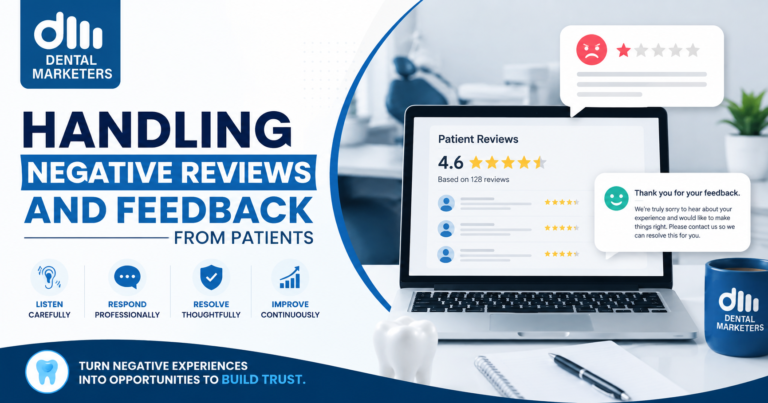
Handling negative reviews means reading patient feedback calmly, replying with empathy, and fixing the problem quickly. Good reputation management protects a dental practice’s image, builds patient trust, and turns criticism into a chance to improve care.
Negative reviews happen to every dental practice. Even the best clinics get one now and then. However, what you do next matters far more than the review itself. A calm, professional reply can turn a bad moment into a good outcome. In fact, many patients judge a practice not by the complaint, but by how well it was handled. Meanwhile, a poorly handled review can linger online for years, quietly shaping opinions long after the original issue is forgotten. This guide explains exactly how to handle negative reviews and feedback from patients, step by step, in simple British English.
What Is Negative Review Management for Dentists?
Negative review management is the process of finding, reading, and replying to critical patient feedback online. It covers reviews on Google, Facebook, and other health directories. In short, it is how a dental practice protects its reputation while still being honest and open with patients. Essentially, it turns a difficult moment into proof that your practice listens and cares.
Why Handling Negative Reviews Matters
Patients now research a dentist before they ever pick up the phone. Therefore, your online reviews shape their first impression of your practice. A single unanswered bad review can quietly push new patients towards a competitor. On the other hand, a thoughtful, well-written reply shows genuine care and professionalism.
Here is why this matters so much:
- Reviews build trust before a patient even calls your practice.
- Google uses reviews as a ranking signal, so they affect your local SEO.
- A calm, kind reply can turn an angry patient into a loyal one.
- Feedback often points to real problems that are worth fixing.
- Ignoring reviews makes a practice look uncaring or unprofessional.
- Prospective patients often read the replies, not just the reviews.
Because of this, every dental practice needs a clear, consistent plan for handling negative reviews dentists receive. Without one, staff may react emotionally, which can make a small problem much bigger.
Common Types of Negative Feedback Dentists Receive
Understanding the type of complaint helps you respond in the right way. Generally, negative feedback falls into a few common categories.
- Long wait times. Patients often feel frustrated when appointments run late.
- Billing confusion. Unclear pricing or surprise costs upset patients quickly.
- Communication issues. Patients may feel a treatment was not explained clearly.
- Front desk experience. A rushed or unfriendly welcome can colour the whole visit.
- Pain or discomfort. Some reviews describe pain during or after treatment.
Once you know which category a review falls into, you can respond with the right tone and the right fix.
Step-by-Step Guide to Responding to Negative Reviews
Use these steps whenever a negative review appears on your practice page.
- Read the review carefully. First, read the full review twice. Make sure you fully understand the complaint before you write a single word.
- Pause before replying. Do not reply while you feel upset or defensive. Instead, wait a few hours. A calm reply almost always works better than a quick, emotional one.
- Thank the patient. Start your reply by thanking them for their feedback. This shows respect, even when the review feels unfair or exaggerated.
- Apologise sincerely. Say sorry for their experience, not necessarily for the practice being wrong. For example, write “We’re sorry to hear this” rather than admitting fault publicly.
- Keep patient details private. Never share medical details, treatment history, or appointment dates in a public reply. This protects patient privacy and keeps you within GDPR rules.
- Move the conversation offline. Ask the patient to call or email your practice directly. This lets you solve the issue properly and privately, away from public view.
- Follow up and fix the problem. Next, check that the issue actually gets resolved for that patient. Then, use the feedback to improve your service for future patients too.
- Keep your tone consistent. Finally, use the same calm, polite tone across every reply. This builds a reputation for professionalism over time.
What to Avoid When Responding to Negative Reviews
Some responses can make a bad situation even worse. As a result, it helps to know what not to do.
- Do not argue with the patient in public.
- Do not ask the patient to remove the review.
- Do not ignore the review and hope it disappears.
- Do not use a copy-and-paste reply for every complaint.
- Do not reveal any clinical or personal information.
Avoiding these mistakes protects both your reputation and your patients’ trust.
How to Monitor Reviews Across Multiple Platforms
Reviews do not only appear on Google. Patients also leave feedback on Facebook, health directories, and even social media posts. Therefore, checking one site is never enough.
- Set up alerts so you know as soon as a new review appears.
- Check your Google Business Profile at least twice a week.
- Ask your team to flag any feedback they hear about in person.
- Keep a simple log of complaints, so patterns become easy to spot.
- Review your responses monthly to make sure the tone stays consistent.
This way, no review slips through unnoticed, and every patient feels heard quickly.
Turning Feedback Into Practice Improvements
Negative feedback is not only a reputation issue. It is also useful information. Indeed, many practices discover real, fixable problems through patient reviews.
For example, if several patients mention long wait times, it may be time to review your scheduling system. Similarly, if patients often mention confusing bills, clearer pricing information could help. In this way, every complaint becomes a small opportunity to improve the patient experience for everyone.
Key Benefits of Strong Reputation Management
Good reputation management brings real, measurable results for a dental practice. Specifically, it helps in these ways:
- More patients choose your practice after reading thoughtful, professional replies.
- Your local search rankings gradually improve over time.
- Negative reviews lose their impact when balanced by many positive ones.
- Staff feel more confident knowing complaints are handled properly and calmly.
- Patients feel genuinely heard, which builds long-term loyalty.
- Your practice looks more trustworthy compared with competitors nearby.
As a result, practices that manage reviews well tend to grow faster than those that simply ignore feedback. It also helps to actively encourage more patients to leave reviews, since a steady flow of positive feedback naturally balances out the occasional negative one. Over time, this creates a strong, healthy review profile that reflects the true quality of your care.
Frequently Asked Questions
How should I respond to a negative dental review?
Stay calm, thank the patient, apologise for their experience, and offer to discuss it privately by phone or email.
Can I remove a negative review?
You can only report reviews that break platform rules, such as fake, abusive, or spam content. Otherwise, genuine reviews usually cannot be removed.
Should every review get a reply?
Yes. Replying to both positive and negative reviews shows patients that their feedback truly matters to your practice.
What if a review mentions private patient information?
Report it to the platform immediately. Never confirm or discuss treatment details publicly, as this can breach GDPR rules.
How long should I wait before replying to a bad review?
A reply within 24 to 48 hours usually works best. This shows patients you are attentive without appearing rushed or emotional.
How can I get more positive reviews?
Ask happy patients directly after their appointment. A simple, polite request, sent by text or email, often works best.
Does responding to reviews really affect my search rankings?
Yes. Search engines notice active, well-managed profiles. Regular, thoughtful replies can help your practice appear higher in local search results over time.
Let Dental Marketers Help You Manage Your Reputation
Handling negative reviews well takes time, patience, and the right strategy. That is exactly where Dental Marketers comes in. We help UK dental practices build a stronger online reputation through smart, consistent review management and better search visibility.
Our team can guide you on how to encourage more patients to leave reviews, so positive feedback grows naturally over time and balances out the occasional complaint.
We can also help you strengthen your presence with our local SEO guide for dentists, so more local patients find your practice first.
Get in touch with Dental Marketers today, and let us help you turn patient feedback into steady, long-term practice growth.