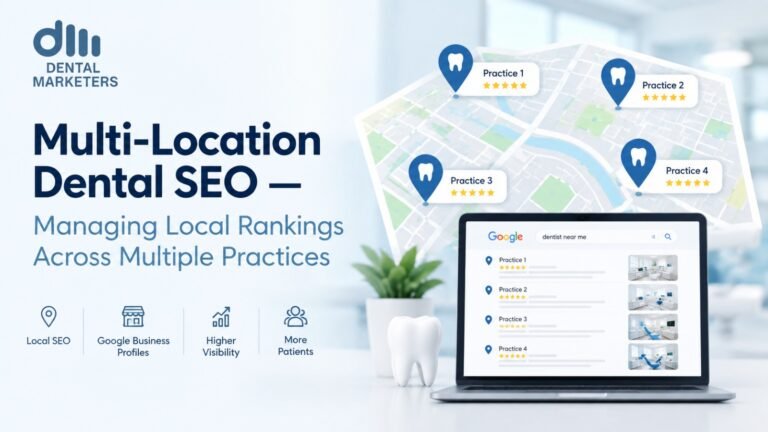
Multi-location dental SEO means optimising each practice location separately, with its own Google Business Profile, landing page, and local content, so every site ranks in its own area without competing against sister locations. Success depends on consistent NAP details, unique local content, and clear tracking for each practice.
Introduction
Running one dental practice website is straightforward. Running several makes SEO far more complex. Each location competes in its own local market, with its own patients and its own search results. This guide explains how to manage local rankings across multiple practices, step by step.
What Is Multi-Location Dental SEO?
Multi-location dental SEO is the practice of optimising a dental group’s online presence. The goal is simple: help each individual practice rank well in its own local area. It treats every location as its own local business. It does not rely on one large website trying to rank everywhere at once.
Why Multi-Location SEO Needs Its Own Approach
Multi-location SEO is not simply single-location SEO repeated several times. Each practice has its own competitors. Each has its own local search terms. Each has its own patient community. Treating every location the same way often leads to weaker results across the board.
What It Is
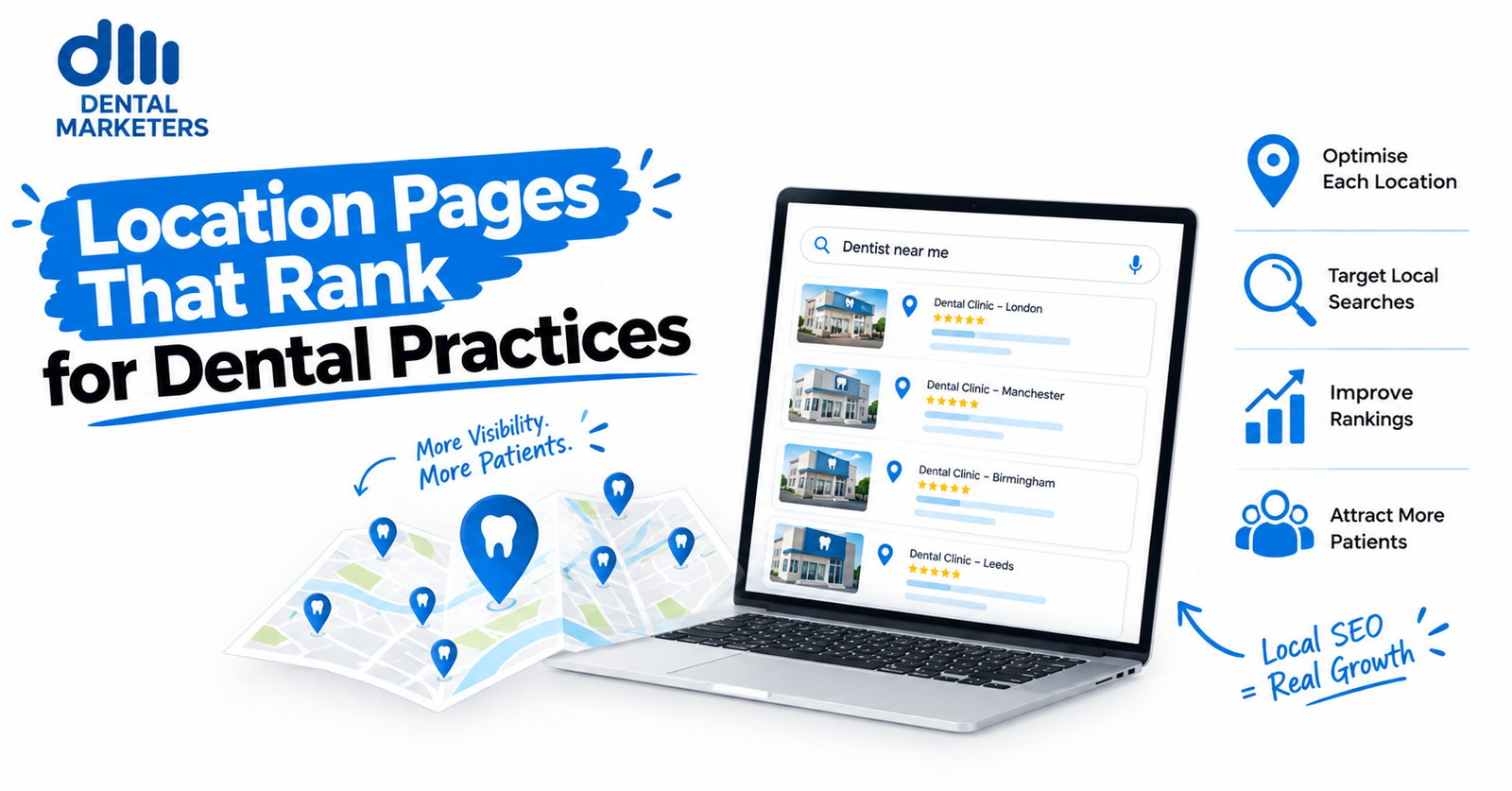
At its core, multi-location SEO means giving each practice a distinct, well-optimised online identity. This includes its own Google Business Profile, its own web page, and its own local content.
Why It Matters
Without a location-specific approach, practices often compete against each other for the same search terms. This can confuse both patients and search engines, weakening visibility everywhere.
How It Works
Search engines rank pages based on how relevant they are to a specific local area. A page written generically for “the whole group” rarely ranks well. A page written specifically for one town or postcode performs far better.
What Is Keyword Cannibalisation?
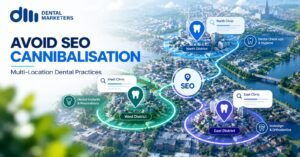
Keyword cannibalisation happens when several pages from the same practice group compete for the same search term. Instead of one strong page ranking well, weaker pages compete against each other. Search engines often struggle to choose between them. This usually means lower rankings for every page involved, not just one.
Key Elements Of Multi-Location Dental SEO
- A unique Google Business Profile for every single location, never shared or combined
- Consistent Name, Address, and Phone Number, known as NAP, across every listing
- A dedicated landing page for each practice, with its own content and local detail
- Location-specific schema markup, so search engines understand where each practice sits
- Individual review management for each location, rather than one shared approach
- Local backlinks and community mentions relevant to each specific area
Step-By-Step Guide: Managing SEO Across Multiple Locations
Follow these steps to build a strong, well-organised multi-location SEO strategy.
Step One: Set Up A Separate Google Business Profile For Each Practice
Claim and verify a Google Business Profile for every location. Never link more than one practice to the same profile.
Step Two: Build A Dedicated Page For Each Location
Create a clear, well-structured page for each practice, with its own address, services, and local details. Avoid copying the same content across multiple pages.
Step Three: Add Location Schema To Every Page
Use structured data to tell search engines exactly where each practice is located. This helps each page appear correctly in local search results.
Step Four: Keep NAP Details Consistent Everywhere
Check that your name, address, and phone number match exactly across your website, directories, and review platforms. Small differences can quietly harm your rankings.
Step Five: Write Local, Specific Content For Each Practice
Mention local landmarks, community events, or neighbourhood details relevant to each location. This helps search engines see each page as genuinely local, not generic.
Step Six: Manage Reviews Separately For Each Location
Encourage and respond to reviews individually for every practice. This builds trust with patients and shows search engines that each location is active and engaged.
Step Seven: Track Performance For Each Location Individually
Set up separate tracking for each practice, rather than looking at group-wide numbers alone. This shows you exactly which locations need attention.
Managing SEO For A Growing Dental Group
The right approach often depends on how many locations you manage. A group with two or three practices can usually manage local content directly. Close oversight of every page is easy at this size. A larger group with ten or more locations often needs a clearer process. A content template can help here. It allows some local flexibility while keeping the brand consistent. As a dental group grows, a simple, repeatable system matters more than treating each new location as a one-off task.
Keeping Content Consistent Across Locations
Consistency and localisation can feel like opposing goals. In practice, they work well together with the right structure. A shared content template can cover your core brand tone and treatment information. Each page can still include local detail, such as area-specific services or community involvement. This keeps your brand recognisable everywhere. It also gives each page the local relevance search engines reward.
How One Location’s Reviews Can Affect The Whole Group
Patients often research a dental group as a whole, not just one branch. So, a run of poor reviews at one location can shape how people view the entire group. This can happen even if other practices are performing well. Because of this, consistent service and review management across every location protects the reputation of the whole group, not just one site.
How Far Should Local Tracking Reach?
Tracking rankings for one keyword nationally does not tell you much for a local practice. Instead, it helps to check rankings within a set radius around each location, such as five to seven miles. This shows how visible each practice truly is to nearby patients, rather than a broad, less useful national picture.
Key Benefits Of A Strong Multi-Location SEO Strategy
- Each practice ranks in its own local area, rather than competing with sister locations
- Patients find accurate, relevant information for their nearest practice
- Consistent NAP details build trust with both patients and search engines
- Individual tracking shows exactly which locations need extra support
- A clear content system saves time as the group continues to grow
Common Mistakes To Avoid
- Linking multiple locations to a single Google Business Profile
- Copying the same content across every location page
- Allowing NAP details to differ across directories and platforms
- Targeting the same broad keyword from several locations at once
- Reviewing performance only at group level, without checking individual practices
FAQs
What is multi-location dental SEO?
It is the process of optimising each dental practice location individually, so every site ranks well in its own local area rather than competing with sister locations.
Why do multiple locations sometimes compete with each other in search results?
This happens through keyword cannibalisation, where several pages target the same search term. Search engines then struggle to choose which page to rank highest.
Should each practice have its own Google Business Profile?
Yes, always. Every physical location needs its own separate, verified profile. Sharing one profile across locations causes confusion and can harm rankings.
How important is NAP consistency for multi-location SEO?
It is very important. Even small differences in your name, address, or phone number across platforms can weaken trust signals for search engines.
Does one location’s reviews affect the whole dental group?
Yes, often. Patients frequently see a dental group as one brand, so reviews at one location can shape perceptions of the whole group.
How does content strategy change as a dental group grows?
Larger groups usually benefit from a repeatable content template that balances brand consistency with local relevance, rather than treating every new location separately.
Internal Linking Suggestions
To support this topic, link to related pages such as:
- A guide on Google Business Profile management for multiple locations
- A page explaining local schema markup for dental websites
- A resource on avoiding keyword cannibalisation
- A guide to managing patient reviews across multiple practices
Use natural anchor text, such as “learn about Google Business Profile management” or “read our guide to local schema markup.”
Grow Every Location With Dental Marketers
Managing SEO across multiple dental practices takes a different approach to running a single site. Dental Marketers helps dental groups build a clear, repeatable system that keeps every location visible in its own local area. We set up individual Google Business Profiles, write genuinely local content, and track performance practice by practice, so no location gets left behind. Get in touch with Dental Marketers today to build a multi-location SEO strategy that grows with your group.
Also read:https://dentalmarketers.co.uk/local-seo-dentists-guide/