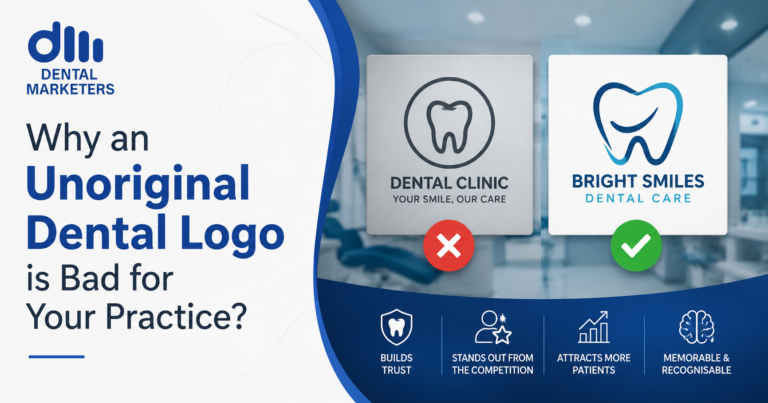
An unoriginal dental logo is a copied, stock or template design that other businesses can also use. It harms a dental practice because patients cannot tell one brand from another, the practice often cannot register the mark as a trademark, and a later rebrand costs a great deal in new signage, print and web work.
Lots of UK practices pick a quick, cheap logo. At first, it looks fine. Later, though, it causes real trouble. Patients forget it. Rival practices use the same artwork. Some owners cannot even prove the logo belongs to them. So this guide explains the risks in plain words. It also shows you how to check your own logo today.
What Is an Unoriginal Dental Logo?
An unoriginal dental logo is a mark built from stock art, a free template or a copied design. Other businesses can buy or download the very same artwork. As a result, the logo never truly belongs to you, and it fails to set your practice apart.
You have probably seen the pattern. A white tooth. A swoosh. A soft blue gradient. Perhaps a smile made from a curved line. These shapes appear on thousands of dental brands across the UK. They are not wrong, exactly. However, they are not yours either.
Why an Unoriginal Dental Logo Hurts Your Practice
Here is what actually goes wrong, one problem at a time.
1. Patients Cannot Tell You Apart
People choose a dentist quickly. They scan a map, a set of search results or a high street. Then they judge each brand in a second or two.
A generic mark gives them nothing to hold on to. Because of that, your practice blends into the row of blue teeth beside it. Worse, patients sometimes mix you up with a rival. So the referral they meant to send you goes elsewhere.
2. You May Not Own It
Many cheap logos come with no paperwork at all. The designer keeps the source files. The contract says nothing about copyright.
Later, you ask for a vector file for your new sign. Suddenly, nobody answers your emails. Meanwhile, your printer cannot use the low-quality image you have. In short, you paid for a logo, yet you do not own it.
3. You Usually Cannot Trademark It
UK trademarks sit with the Intellectual Property Office. Dental services fall under Class 44.
To register a mark, it must be distinctive. A stock tooth icon rarely passes that test. Also, template logos usually come with a non-exclusive licence, which means the seller can sell the same design again and again. So you cannot stop anyone else from using it.
4. Someone Else May Already Own It
This one stings. You build your brand for three years. Then a letter arrives from a solicitor. Another practice registered a very similar mark first.
Now you must argue, or you must change everything. Either way, it costs money and time you never planned for.
5. It Can Create Compliance Problems
Logos often carry a strapline. Straplines carry claims. However, dental advertising in the UK must stay honest and clear.
The General Dental Council expects truthful marketing. The Advertising Standards Authority applies the same rule to every UK business. Also, only dentists on a GDC specialist list may call themselves a specialist. So a lock-up that says “specialist” or promises a perfect result can land you in an awkward spot.
6. It Weakens Your Brand Online
Your logo works far harder than most owners think. It appears on your Google Business Profile. It sits in your favicon, your app icons, your social profiles and your review pages.
Google connects these signals to build a picture of your brand. A copied mark blurs that picture. Meanwhile, branded searches matter more every year, especially now that AI answers pull from clear, consistent brand data. In short, a forgettable logo means fewer people search for you by name.
7. Fixing It Later Costs Far More
Getting it wrong is rarely a small mistake. Consider what you must replace:
- External signage, fascia panels and window graphics
- Practice stationery, referral pads and consent forms
- Uniforms, name badges and treatment room graphics
- Appointment cards, leaflets and local adverts
- Your website, email templates and patient messages
Signage alone can run to thousands of pounds. Above all, you lose the familiarity you spent years building. Patients see a new look and wonder whether you moved or sold up.
8. It Lowers the Value of Your Practice
Brand equity sits inside goodwill. When you sell, buyers check what they actually get.
An unregistered, borrowed mark adds nothing. In fact, it can raise questions during due diligence. Therefore, an original, owned brand protects your exit as well as your diary.
How to Check If Your Dental Logo Is Unoriginal
Follow these six steps. Each one takes minutes.
Step 1: Run a reverse image search. Upload your logo to Google Lens or TinEye. If similar marks appear, your design is not unique.
Step 2: Search the stock sites. Type a plain description, such as “tooth swoosh icon”, into a stock library. Then look for the exact shape inside your logo.
Step 3: Compare your local rivals. Open a map and look at every practice within five miles. Next, place their logos beside yours. Do you stand out, or do you blend in?
Step 4: Search the UK trademark register. Use the Intellectual Property Office search tool. Check Class 44 for marks close to yours.
Step 5: Ask for your source files. Request the vector files, such as .AI, .EPS or .SVG. If nobody can send them, you have a real problem.
Step 6: Read your design contract. Look for a clear line that assigns copyright to you. No line, no ownership.
What a Strong, Original Dental Logo Gives You
- Instant recognition. Patients spot you on a map, a sign or a search result.
- Legal protection. You can register the mark and defend it properly.
- Full ownership. You hold the files, so any printer or agency can use them.
- Clean scaling. It works on a fascia board and on a tiny phone screen.
- Premium positioning. A considered brand supports higher-value treatment plans.
- Consistent trust. Every touchpoint looks like it comes from the same practice.
- Lasting value. The brand still works in ten years, and it adds to goodwill at sale.
What to Ask Before You Hire a Designer
- How many concepts and rounds of changes does the fee include?
- Will you supply a full file pack, including vector and mono versions?
- Do you assign the copyright to me in writing?
- Do you check the trademark register before you present ideas?
- Can you show me dental brands you designed from scratch?
Frequently Asked Questions
What counts as an unoriginal dental logo?
Any logo built from stock art, a template or a copied design counts. Other businesses can legally use the same artwork.
Is a tooth in the logo always a bad idea?
No, but it is very common. A tooth done well can work. A stock tooth icon rarely does.
Can I trademark a template logo?
Usually not. Templates lack the distinctiveness the Intellectual Property Office looks for, and the licence is rarely exclusive.
How much should a dental logo cost in the UK?
Expect hundreds of pounds, not tens. Full brand identity work costs more, because it includes colour, type and guidelines.
Do I own the logo I paid for?
Only if your contract assigns the copyright to you in writing. Payment alone does not transfer ownership.
Should I refresh my logo or rebrand fully?
Refresh when the shape still works and only feels dated. Rebrand when the mark is generic, borrowed or legally weak.
Will changing my logo confuse patients?
It can, so plan the rollout. Announce it early, keep your colours close at first, and update every touchpoint together.
What files should my designer hand over?
Ask for .AI or .EPS, .SVG, transparent .PNG files, a mono version, a reversed version and your colour codes.
Ready to Own a Brand That Patients Remember?
Your logo sits on every sign, every letter and every search result. So it deserves proper thought. If your current mark feels generic, borrowed or simply tired, then now is the right moment to fix it.
At Dental Marketers, we design original dental brands from scratch. We check the trademark register first. We hand over every file you need. Above all, we assign full ownership to you in writing.
Get in touch with Dental Marketers for a free logo review. We will tell you honestly whether your logo works or whether it holds your practice back.
Also read: Why You Shouldn’t Copy Dental Content from Suppliers