
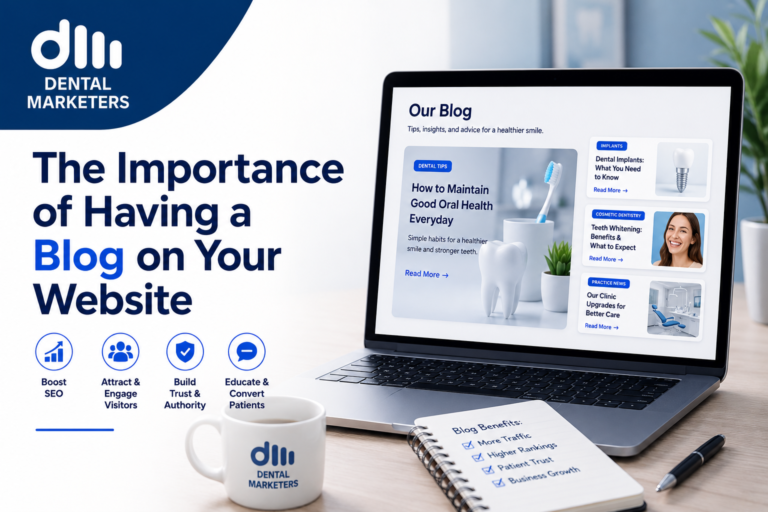
A dental practice blog helps patients find your clinic online, builds trust before they ever book, and improves how your website ranks on Google. In short, blogging for dentists turns a static website into a helpful resource that keeps working for you, day and night.
A blog is not just a nice extra on your website. For a dental practice, it is a real tool for growth. It brings new patients to your door. It answers questions before a patient even calls. And it shows Google that your website is active and useful. This article explains the importance of a dental blog in plain terms. It also gives you simple steps to get started.
What Is a Dental Practice Blog?
A dental practice blog is a section of your website where you share helpful articles. These articles answer common patient questions. For example, you might write about tooth pain, teeth whitening, or how to choose a dentist. Each post adds a new page to your site. Over time, this builds a library of useful content for your patients.
Why Blogging Matters for Dentists
Patients search online before they book an appointment. They type questions into Google, such as “why does my tooth hurt at night” or “is teeth whitening safe.” If your website answers these questions, you appear in the results. This is where blogging for dentists makes a real difference.
Here is what a dental blog does for your practice:
- It answers patient questions, so people trust your clinic before they call.
- It helps your website rank higher on Google, because fresh content signals relevance.
- It shows your knowledge and experience, which builds confidence in new patients.
- It supports your other marketing, such as social media and email newsletters.
- It gives your front desk fewer repeat questions, since patients read the answers first.
Additionally, search engines reward websites that update often. A blog gives you a simple way to add new content regularly, without changing your core pages. As a result, your whole website benefits, not just the blog itself.
How Blogging Works: A Simple Step-by-Step Guide
Getting started is easier than most dentists expect. Follow these steps:
Step 1: Pick a topic your patients actually ask about.
Think about the questions you hear every week in your surgery. These make the best blog topics, because real people are already searching for the answers.
Step 2: Write a clear, simple answer.
Keep your sentences short. Avoid dental jargon where you can. Explain things the way you would to a nervous patient in the chair.
Step 3: Add a helpful structure.
Use headings to break up your article. Add a short summary at the top. This helps both readers and search engines understand your page quickly.
Step 4: Include a call to action.
Every blog post should invite the reader to take a next step, such as booking a check-up or contacting your team.
Step 5: Publish and share.
Post your article on your website. Then share it on your social media pages and in your email newsletter, so more people see it.
Step 6: Keep going.
One post will not change much on its own. However, consistent posting builds momentum over months. This steady effort is what drives long-term results.
Key Benefits of a Dental Blog
A strong blog supports your practice in several ways. Consider these key benefits:
- More visibility on Google. Fresh, relevant content helps search engines find and rank your website.
- More trust from patients. Helpful articles show that your team is knowledgeable and approachable.
- Fewer anxious patients. Clear information about procedures can ease common fears before a visit.
- Better patient education. Blogs let you explain treatments in detail, so patients arrive informed.
- Stronger local reputation. Local topics, such as advice for your town or area, help you connect with nearby patients.
- Long-term value. Unlike an advert, a blog post keeps working for years after you publish it.
Furthermore, a blog gives your practice a voice. It lets you share your approach to care, not just your services. This human touch often makes the difference when a patient chooses between two clinics.
How a Dental Blog Supports Local SEO
Most patients search for a dentist near them. They do not simply type “dentist.” Instead, they type things like “dentist in [town]” or “emergency dentist near me.” A dental practice blog gives you the space to speak directly to your local area.
For example, you could write about local water quality and its effect on teeth, or about school dental health programmes in your area. This kind of content signals to Google that your practice is genuinely rooted in your community. In turn, this can improve your visibility in local search results and on Google Maps.
Local content also helps with a growing trend: AI-powered search. Tools such as Google’s AI Overviews, ChatGPT, and Gemini now pull information from helpful, well-structured web pages to answer patient questions directly. A clear, well-organised dental blog gives these AI systems accurate information to draw from, which can put your practice in front of patients at the very moment they are searching for answers.
Blog Content vs. Service Pages: What Is the Difference?
It helps to understand how a blog differs from your main service pages. Your service pages, such as “Teeth Whitening” or “Dental Implants,” describe what you offer. They are direct and focused on conversion.
A blog, on the other hand, answers broader questions. It might explore “Does teeth whitening hurt?” or “How long do dental implants last?” These topics attract patients who are still researching, rather than ready to book immediately. Together, service pages and blog posts cover the full patient journey, from first question to final booking.
Common Mistakes to Avoid
Many practices start a blog with good intentions, then lose momentum. Here are common pitfalls:
- Posting once and stopping. Search engines and patients both respond to consistency, not a single burst of effort.
- Writing only about services. Balance service pages with helpful, patient-focused advice.
- Ignoring structure. A wall of text is hard to read. Use headings, short paragraphs, and bullet points instead.
- Skipping the call to action. Always guide the reader towards booking or getting in touch.
Avoiding these mistakes keeps your blog useful and consistent, rather than a forgotten page on your website.
Frequently Asked Questions
Why is blogging important for a dental practice?
Blogging helps your website rank higher on Google, builds trust with new patients, and answers common questions before they even call your practice.
How often should a dentist post a blog?
Aim for at least one post per month. Regular posting helps your website stay active and visible on search engines.
What should a dental blog write about?
Write about topics your patients already ask about, such as oral hygiene tips, treatment explanations, and answers to common dental fears.
Does a dental blog really bring in new patients?
Yes. Many patients research symptoms and treatments online before booking. A helpful blog post can be their first contact with your practice.
Do I need to be a professional writer to blog?
No. Clear, simple, and honest writing works better than complicated language. Focus on being helpful, not clever.
Can a blog help with AI search results, not just Google?
Yes. Clear, well-structured blog posts are easier for AI tools like AI Overviews and ChatGPT to read and quote, which can put your practice in front of patients searching through those tools.
How long should a dental blog post be?
There is no fixed rule. However, most helpful posts run between 600 and 1,200 words. This gives enough room to answer the question fully, without overwhelming the reader.
Final Thoughts
A blog is a simple, lasting way to grow your dental practice online. It builds trust, answers questions, and helps new patients find you. Most importantly, it keeps working long after you hit publish. If you have not started yet, now is a good time to begin.
Grow Your Practice with Dental Marketers
Building a blog that actually brings in new patients takes more than good writing. It takes strategy, consistency, and a clear understanding of dental SEO. This is where Dental Marketers can help.
Our team works with dental practices across the UK to build blogs, content, and full SEO strategies that get real results. We understand what patients search for, and we know how to turn that into steady, qualified enquiries for your practice.
Ready to see how strong content and SEO can grow your patient numbers? Explore our Dental SEO Strategies for 2026 and find out how Dental Marketers can help your practice thrive online.