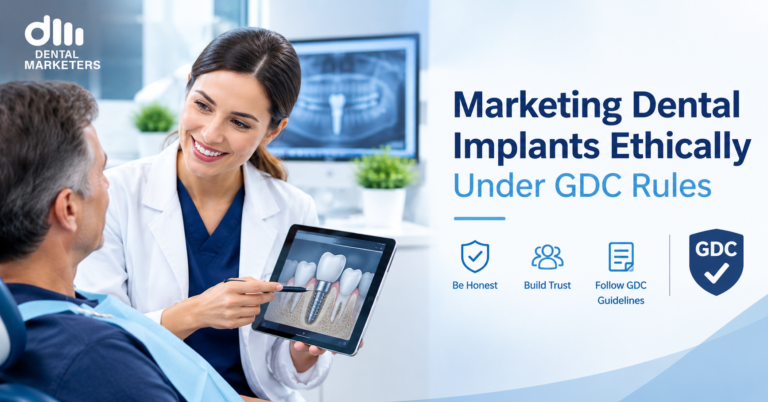
To market dental implants ethically in the UK, practices must follow GDC guidance and the ASA’s CAP Code. That means no misleading claims, no “specialist” or “implantologist” titles unless earned, clear prices and finance terms, honest reviews and genuine before-and-after images. Every advert should also say that implants depend on a proper assessment.
Dental implants are a high-value treatment, so many practices market them hard. However, implant marketing carries more risk than most. Patients spend a lot, and outcomes vary. This guide explains the main GDC and advertising rules for implants. It also gives you a simple checklist to keep your marketing ethical.
What Does Ethical Implant Marketing Mean?
Ethical implant marketing means promoting dental implants in a way that is honest, clear and fair to patients. It follows GDC standards, the CAP Code and UK consumer law. In short, it helps patients make an informed choice rather than pushing them into treatment.
Who Sets the Rules?
Several bodies shape how UK practices can advertise implants:
- The General Dental Council (GDC) sets professional standards and guidance on advertising for all registrants.
- The Advertising Standards Authority (ASA) enforces the CAP Code for non-broadcast adverts, including websites and social media.
- The Competition and Markets Authority (CMA) enforces consumer law, including rules on fake reviews and pricing.
- The Financial Conduct Authority (FCA) regulates how practices promote patient finance.
- Google and Meta add their own health advertising policies.
Importantly, the GDC holds you responsible for any advert that carries your name. So even if an agency writes your content, you must check it.
The Key Rules for Implant Marketing
1. Use the Right Titles
The GDC has 13 specialist lists, but implant dentistry is not one of them. Therefore, no dentist can call themselves an “implant specialist”. Dental defence bodies also advise against the word “implantologist”, because it can suggest a specialist status that does not exist.
Instead, you can use phrases such as:
- “Dentist with a special interest in implant dentistry”.
- “Experienced in dental implants”.
- “Practice limited to implant dentistry”, if that is true.
Also, take care with letters after your name. Only list qualifications that patients can understand, and never imply that a course makes you a specialist.
2. Avoid Misleading Claims
The GDC asks you to back up claims with facts and avoid creating unjustified expectations. Likewise, the CAP Code requires evidence before you publish any objective claim. For implants, watch these common phrases:
- “Permanent” or “last a lifetime”: implants can fail, and they need ongoing care.
- “Teeth in a day” or “same-day teeth”: say clearly that this only suits some patients.
- “Pain-free”: you need solid evidence, so “comfortable” or “we offer sedation” is safer.
- “99% success rate”: only use a figure you can prove, and explain what it means.
- “No bone graft needed”: you cannot know this before an assessment.
3. Always Mention Assessment and Suitability
Implants do not suit everyone. For example, gum disease, smoking, bone loss and some health conditions can affect results. So every implant advert and landing page should say that treatment depends on a full assessment. Moreover, the GDC expects this for offers on social media and deal sites.
4. Be Clear About Prices
Implant prices confuse many patients. A “from” price must reflect a real treatment that some patients actually receive. In addition, explain what the price includes and what it does not. For instance, state whether it covers the consultation, scans, bone grafting, the abutment and the final crown. Also, make clear that implants are private treatment and rarely available on the NHS.
5. Promote Finance Responsibly
Many practices offer finance for implants. However, credit promotions follow FCA rules. You need the right authorisation, or you must work through an authorised provider. Also, include a representative example where the rules require it, and never pressure patients with finance offers.
6. Use Honest Reviews and Testimonials
Since April 2025, UK consumer law bans fake reviews and hidden incentives for reviews. So never write reviews yourself, buy them or reward only positive feedback. Instead, ask every patient for honest feedback. Also, keep written consent for any testimonial you use in marketing.
7. Handle Before-and-After Images Carefully
Before-and-after images must be genuine and show typical results. Therefore, do not retouch the after image. Keep signed, dated consent and explain that patients can withdraw it at any time. Furthermore, remember that Meta restricts some before-and-after images in health adverts.
8. Do Not Compare or Criticise
Never claim that you are better than other dentists. Similarly, avoid scare tactics about treatment abroad. Instead, explain the benefits of local aftercare in a calm, factual way.
Social Media and Paid Adverts
The same rules apply on Instagram, Facebook, TikTok and Google. However, short formats make it easy to cut key details. So keep the suitability message in every post and advert, not just on your website.
- Avoid countdown timers and pressure phrases such as “only three slots left” unless true.
- Make sure any offer links to a page with full terms.
- Check that team videos do not use misleading titles.
- Follow each platform’s health advertising policies.
What Your Website Should Show
GDC guidance also sets out information that practice websites should display. For example:
- The name and professional qualifications of each dentist.
- Each dentist’s GDC registration number.
- The practice address and contact details.
- The GDC’s contact details and a link to the online register.
- Your complaints policy and how to use it.
- The date you last updated the website.
As a result, a compliant website builds trust and supports your SEO at the same time.
How to Audit Your Implant Marketing: Step by Step
- List every channel. Include your website, social media, Google Ads, Meta Ads, leaflets, emails and deal sites.
- Check every title. Remove “specialist” and “implantologist” unless someone is on a relevant GDC specialist list.
- Review every claim. Highlight words like “permanent”, “pain-free” and “guaranteed”. Then remove them or add evidence.
- Add suitability wording. Make sure each advert says treatment depends on an assessment.
- Fix your prices. Show what each price includes. Also, check that every “from” price reflects a real case.
- Check finance promotions. Confirm your FCA status and add the required wording.
- Audit reviews and images. Confirm consent for every photo and testimonial. Next, remove any image you have edited.
- Update your website details. Add GDC numbers, qualifications, complaints information and the update date.
- Set a review routine. Check your marketing every few months. Finally, keep a simple record of what you checked and when.
Why Ethical Marketing Also Helps SEO
Ethical marketing and good SEO support each other. Google treats health content with extra care, so it looks for signs of expertise and trust. Clear clinician profiles, honest prices, risk information and helpful FAQs send exactly those signals. Also, AI search tools prefer clear, factual pages they can quote with confidence.
Key Benefits of Ethical Implant Marketing
- Lower risk of ASA rulings and GDC fitness to practise concerns.
- Stronger trust from patients comparing high-value treatment.
- Better-informed enquiries and fewer wasted consultations.
- Stronger E-E-A-T signals for Google and AI search.
- Fewer complaints and disputes after treatment.
- A reputation that lasts longer than any single campaign.
Frequently Asked Questions
Can a dentist call themselves an implant specialist in the UK?
No. The GDC has no specialist list for implant dentistry, so no dentist can use that title. Instead, use “special interest in implant dentistry”.
Is “implantologist” allowed?
Dental defence bodies advise against it, because it can suggest specialist status. So the safer choice is to avoid it.
Can I say dental implants are permanent?
Avoid it. Implants can fail and need ongoing care, so the claim may mislead patients.
Can I use before-and-after implant photos?
Yes, with written consent. However, the images must be genuine, unedited and typical of results.
Who checks dental adverts in the UK?
The ASA enforces the CAP Code. Meanwhile, the GDC can act on professional concerns about registrants.
Do I need to show prices for implants?
Clear prices help patients and reduce complaints. If you use a “from” price, explain what it includes.
Can I offer free implant consultations?
Yes, if the terms are clear. Also, state that treatment depends on a proper assessment.
Final Thoughts
Ethical implant marketing does not mean weak marketing. Instead, it means honest claims, clear prices, correct titles and real patient stories. These steps protect your registration and your reputation. At the same time, they build the trust that high-value patients look for. So audit your implant marketing today, then review it regularly.
Market Your Implant Services with Dental Marketers
Dental Marketers helps UK practices grow implant enquiries without cutting corners. We write GDC-aware implant pages, run compliant Google and Meta campaigns and build SEO that earns trust. First, we audit your current implant marketing against GDC and CAP guidance. Then, we fix the risks and strengthen the pages that bring patients
Also read: Orthodontic Marketing Beyond Invisalign | Dental Marketers