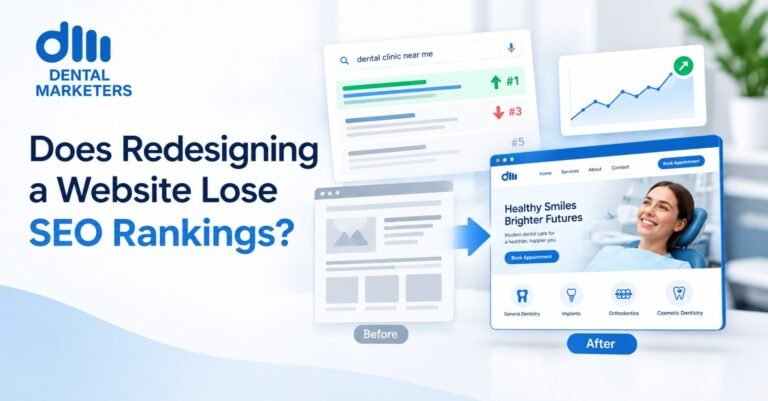
A website redesign can lower SEO rankings for a short time. This mostly happens when a plan is missing. Common causes are broken URLs, missing redirects, and lost content. A planned redesign can protect rankings. It can even help them grow.
A website redesign gives a site a fresh look. It can also add new features. But many site owners worry about one thing. Will it hurt their SEO rankings? This worry is fair. So, this guide explains why rankings can drop. It also shows how to redesign a site the safe way.
What Does A Website Redesign Mean For SEO?
A website redesign is a big update to a site. It can change the design, the layout, or the structure. This matters for SEO. Google uses many signals to rank a page. These signals include URLs, content, links, and speed. When these signals change, rankings can change too.
How Does A Redesign Affect SEO Rankings?
Search engines rank pages using clear signals. A redesign often changes many signals at once. Because of this, Google needs time to check the site again.
Here is what usually happens during a redesign:
- URLs may change. This can break the link between old and new pages.
- Content may get shorter. This can weaken keyword matches.
- Page speed may drop. New images and scripts often slow a site down.
- Internal links may break. This makes the site harder to crawl.
- Headings may change. This can shift how a page matches search terms.
So, some ranking movement is normal after a redesign. However, a big drop often points to a mistake. It is not just a natural shift. Planning is the real difference between a small dip and a big loss. In short, a redesign is not risky on its own. A redesign without a plan is the real risk.
Why Do Some Websites Lose More Rankings Than Others?
Not every redesign causes the same damage. The size of the drop often depends on a few key factors.
- Sites with many old backlinks are at higher risk if URLs change without redirects.
- Sites with a large number of pages face more room for error during migration.
- Sites that change platforms or domains face a bigger shift than a simple design refresh.
- Sites that rush the launch, without testing, often see more issues after going live.
So, the more moving parts a redesign has, the more careful the planning needs to be.
Step-By-Step Guide: How To Redesign A Website Without Losing Rankings
A safe redesign follows a clear process. Each step protects a different part of your SEO. Let us walk through them.
Step One: Audit The Current Site
First, list every page on the site. Note the top pages by traffic. Note the top pages by rankings too. This step builds a clear baseline. You will use it later to check if anything has changed.
Step Two: Build A Redirect Map
Next, match every old URL to a new URL. This step is called a redirect map. It stops search engines from treating pages as lost. It also stops them from treating pages as brand new.
Step Three: Keep Strong Content
Then, protect any content that already performs well. You can update the design around it. But keep the core message in place. Keep the main keywords in place too.
Step Four: Test Before Launch
After that, check every link on the site. Check every redirect as well. Check the page speed score too. Also test how the site works on mobile devices. This step catches problems before they go live.
Step Five: Monitor After Launch
Finally, watch rankings closely for a few weeks. Watch traffic closely too. Quick action on any issue helps rankings recover faster. Waiting too long can turn a small issue into a bigger one.
Key Benefits Of A Well-Planned Redesign
A careful redesign does more than protect rankings. It can also improve them. Here are the main benefits:
- Faster page speed, which supports better rankings
- A cleaner site structure, which helps Google crawl the site with ease
- Updated content, which can match search intent more closely
- A better mobile experience, which supports most search traffic today
- A fresh chance to fix old SEO issues that were never solved
Common Mistakes That Cause Ranking Loss
Some mistakes appear again and again during redesigns. Knowing them in advance helps you avoid them.
- Skipping a content audit before starting the redesign
- Changing URLs without a clear redirect plan
- Removing pages without checking their traffic first
- Launching without a full round of testing
- Ignoring how the new site performs on mobile devices
Warning Signs To Watch For After Launch
Some problems show up fast after a new site goes live. Catching them early is key.
- A sharp drop in traffic, well past a small dip
- Pages that no longer show up in search results
- A rise in broken link errors inside search console tools
- Slower load times on key pages
- Forms or buttons that stop working as they should
If you spot any of these signs, act fast. Small fixes now can stop a bigger drop later.
How To Choose The Right Time For A Redesign
Timing matters more than most people think. A redesign during a busy sales period can add extra risk. So, many teams choose a quieter time of year instead.
- Avoid launching right before a major sales event
- Give your team enough time to test the site fully
- Plan the launch for a day when your team can watch the site closely
- Leave room in the schedule for last-minute fixes
A good launch date reduces stress. It also gives your team time to react if something goes wrong.
FAQs
Does redesigning a website always hurt SEO rankings?
No, it does not. A redesign only hurts rankings when redirects, content, or links are handled poorly. A well-planned redesign can protect rankings. It can even improve them.
How long does it take for rankings to recover after a redesign?
Most small dips settle within a few weeks. Larger drops often come from missing redirects or cut content. These can take longer to recover.
What is the biggest cause of ranking loss during a redesign?
Broken URLs without redirects are the most common cause. This breaks the link between old and new pages, at least in Google’s eyes.
Does a slower website affect SEO after a redesign?
Yes, it does. Page speed is a ranking factor. A slower site after a redesign can lower rankings, even if the content stays the same.
Is SEO migration the same as a website redesign?
Not always. A redesign updates the design and structure of a site. SEO migration can cover bigger changes too. This includes moving to a new domain or a new platform.
Should I redesign my whole site at once or in stages?
This depends on the size of the site. Smaller sites can often redesign in one go. Larger sites may benefit from a staged rollout, tested page by page.
Can I redesign my website myself, without help?
You can, but it carries more risk. A DIY redesign often misses key SEO steps. Working with a team that knows SEO can lower that risk a great deal.
Will my rankings improve after a redesign?
They can. A faster site with clear structure often ranks better over time. But this only happens when the redesign is planned with SEO in mind from the start.
Talk To Dental Marketers About Your Website Redesign
A website redesign should never put your hard-earned rankings at risk. Dental Marketers plans every redesign with SEO built in from the start. We map your URLs with care. We protect your strongest content too. We test your site fully before launch. As a result, your new website can look better and perform better at the same time. Get in touch with Dental Marketers today. Let us help you plan a redesign that keeps your rankings safe.
Also read:https://dentalmarketers.co.uk/dental-seo-strategies-2026/